Posts

Showing posts with the label knitting

An antique book with lace stitch patterns
Image
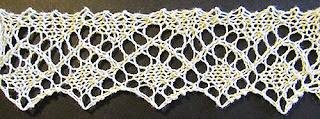
I would love to share with you my recent find - an antique book "The Ladies' Guide to Elegant Lace Patterns, Etc." by Eva Marie Niles, published in 1884. Whilst this book is technically out of print, it can be downloaded for free online. A large number of patterns from the book are also available for free online in an updated format for modern knitters. Find it on Ravelry . Just look at this beautiful lace stitch patterns!

Pattern: Precious Lace Shawl

Image
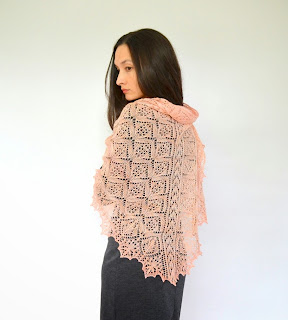
Precious Lace is a beaded lace shawl knitting pattern. It is worked from top to bottom in all-over lace. Silver lined glass beads incorporated into the hem create a richly jeweled edge. This design also features the debut of the “Precious Lace” stitch pattern. Both charted and written patterns are included along with detailed, simple to follow instructions. Finished size 58″ (147 cm) wingspan, 28.15″ (71.5 cm) height at center spine, relaxed after blocking. Measurements may vary according to individual knitting tension. Yarn Lace weight yarn (CYCA 0) Shown here: Malabrigo Yarn Lace (470 yards / 430 meters, 100% merino), color “63 Natural” – 2 skeins. Needles US 0 / 2.00 mm Notions Size 8, silver lined crystal clear round Japanese beads – 1458 pieces (approx. 40 g); Hook for placing beads US 13/14 (0.9 mm); Markers; Blocking accessories; Darning needle. Gauge 25.5 sts x 41 rows = 4” (10 cm) in Precious Lace stitch pattern. This pattern can be found here: Etsy ...

Tutorial: Place Bead Using a Hook

Image
Impale the bead onto a crochet hook (Figure 1). Insert the hook into the stitch loop where the bead will sit, making sure that the hook is facing yo (Figure 2). Pull the loop through the bead (Figure 3). Replace the stitch loop onto the left needle (Figure 4). Knit the stitch (Figure 5). Figure 1

Tutorial: Make 1 Increase (M1) - Left Slant

Image
Left Slant (M1L) With right needle tip, lift the strand between the last knitted stitch and the first stitch and place it on the left needle from front to back (Figure 1), then knit the lifted loop through the back (Figure 2,3). Figure 1

Tutorial: Grafting (Kitchener stitch)

Image
Arrange stitches on two needles so that there is the same number of stitches on each needle. Hold the needles parallel to each other with wrong sides of the knitting facing away from you (unless otherwise instructed). Allowing a yarn in the darning needle to be about four times longer than the width of the grafting area, thread matching yarn on a darning needle. Work from right to left as follows: Step 1. Bring darning needle through the first stitch on the front needle as if to purl and leave the stitch on the needle (Figure 1). Figure 1

Tutorial: Picking Up Selvedge Stitches

Image
Pick up and knit stitches along the selvedges by picking up three stitches for every two selvedge stitches. To do this pick up one stitch under both loops of the first chain stitch (Figure 1), one stitch under just the back loop of the second chain stitch (Figure 2), then one stitch under both loops of the same chain stitch (Figure 3, 4). Continue in this manner along the entire selvedge edge. You will end with about a third more stitches than there are selvedge stitches. For a fuller edge, pick up one stitch from the first stitch, two from the second stitch, and two from the third stitch, and repeat this sequence along the entire selvedge edge. In order to pick up lesser amount of stitches, pick up only one stitch from one loop of the chain stitch. Figure 1

Tutorial: Crochet Chain Provisional Cast-On

Image
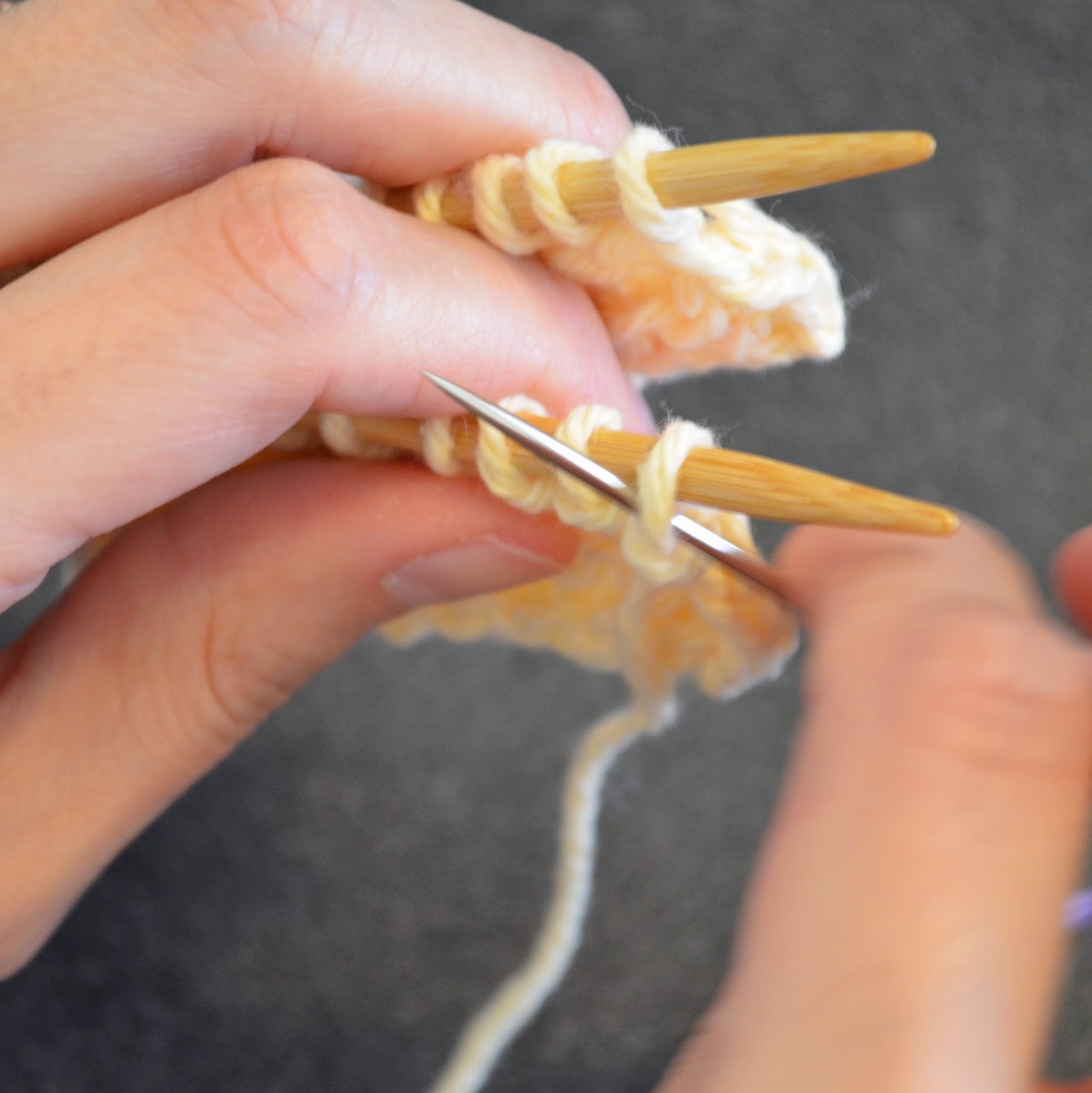
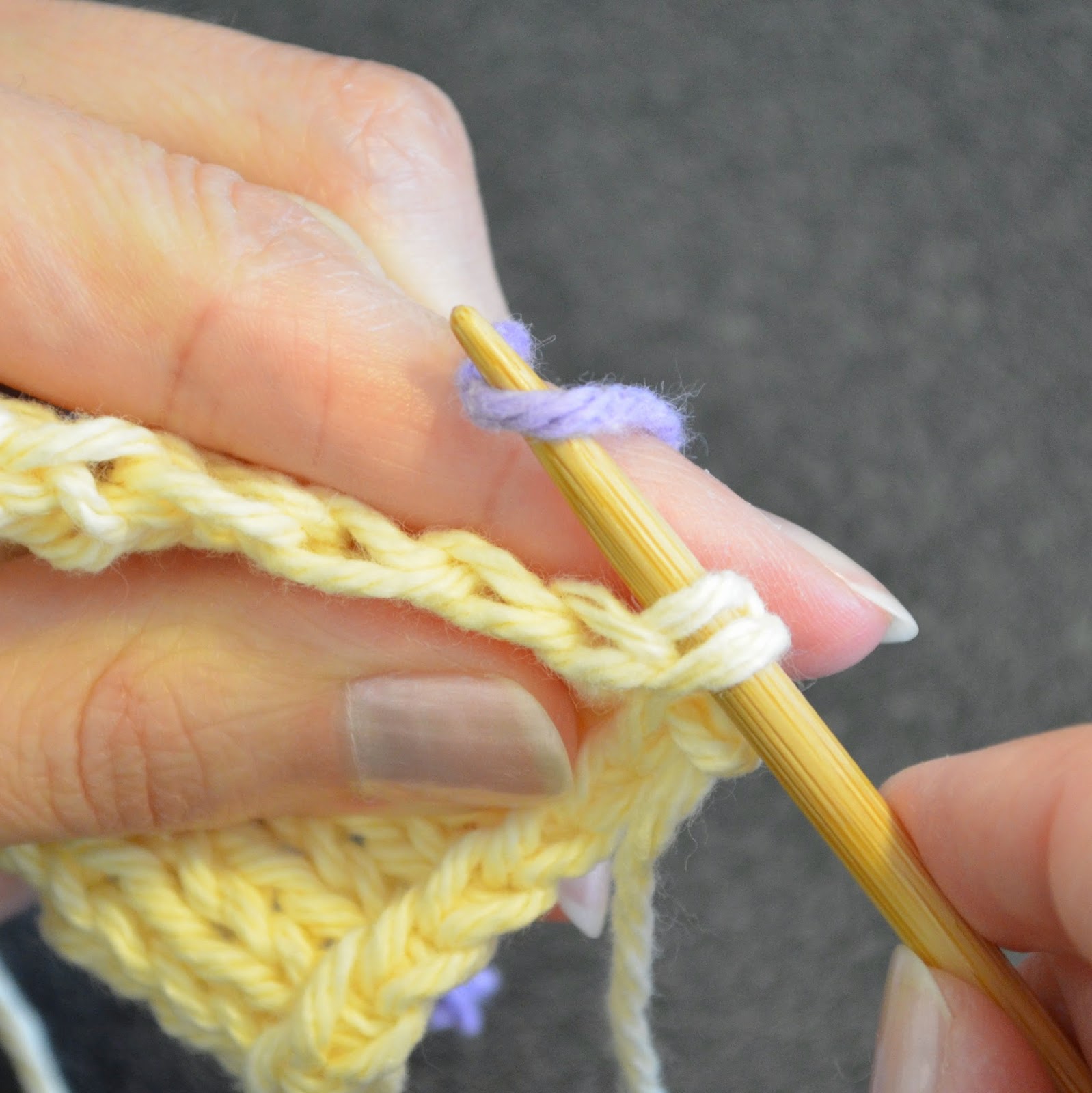
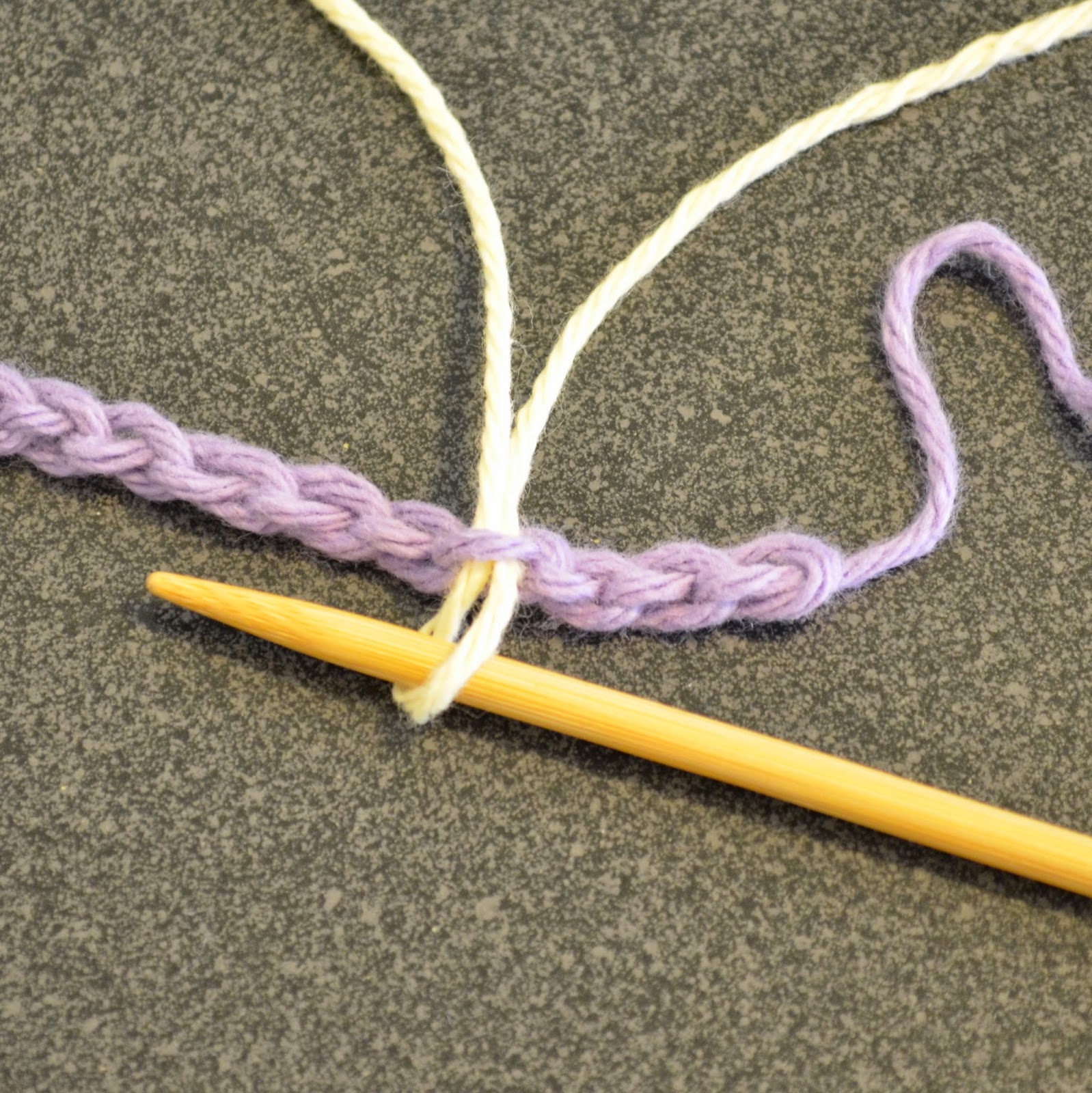
With waste yarn and crochet hook, make a loose crochet chain about six stitches more than you need to cast on. With knitting needle, working yarn, and beginning three stitches from end of chain, pick up and knit one stitch through the back loop of each crochet chain (Figure 1,2) for desired number of stitches. When you are ready to work in the opposite direction, put cast on stitches on your needle (Figure 3, 4, 5), and then pull out the crochet chain to expose live stitches (Figure 6, 7, 8). Figure 1 

Baby Sweater for a Girl

Image
My first baby cardigan! Seamless construction, raglan sleeve with a small fair isle / jacquard installation with hearts motif. Made for a 10 month old girl. Information about the yarn Yarn: Knit Picks, Capra DK Color: Flamingo Fiber Content: 85% Merino Wool, 15% Cashmere Weight: DK Weight Knitting Gauge: 22 sts x 29 rows = 4" on US 4 - 3.5 mm needles Crochet Gauge: 12-17 sc = 4” on 7-I hooks Yards: 123 Grams: 50 Care: Hand Wash/Dry Flat In my opinion it's a quite soft yarn, gentle enough for a baby sweater. It's getting fuzzy in prosess of knitting.

Knitting two socks on one circular needle

Image
Did you know that you can knit 2 socks at the same time on the same circular knitting needle? This video shows how to do it. It's quite amazing! But there is no innovation regarding the hill gusset. The recommended cast on is pretty advanced, but I'm sticking to my faithful Italian cast on for my socks, which is imho ideal for creating flexible edge.

Red Jacket

Image
This red jacket is a very fast knit due to the great gauge of Cascade Sitka yarn (too bad it is discontinued). I started it very spontaneously and knitted with passion. It has raglan sleeves and a close-fitting silhouette. The jacket was worked seamlessly in all-over lace pattern.

Free pattern - Simply Chroma Hat

Image
My new pattern for Simply Chroma Hat was published today on Craftsy and Ravelry for Free. A very simple, straightforward hat - ideal for a beginner. This project requires only half of the suggested yarn skein. The remaining yarn could be used to make a pair of matching gloves, for example. Skill Level: Beginner Skills needed: Italian cast on method, k2tog Size: One size fits most Measurements: 12.5" (32 cm) tall, 9 3/4" (25 cm) wide when laid flat Gauge: 25 sts x 32 rows = 4" (10 cm) in stockinette stitch Materials: Knit Picks Chroma Fingering (396 yards (362 meters), 70% Wool, 30% Nylon), color name "Misty Morn", 0.5 skein 50 grams fingering weight yarn (CYCA 1). US 4 / 3.5 mm 16" needle, or size to obtain gauge. US 4 / 3.5 mm sock needles. Stitch markers 8 pieces. Tapestry needle.

A Treasure for Knitters

Image
It seems I have found a treasure! Real treasure for knitters - Stitch Maps - knitting charts drawn without grids so you can see how the fabric flows. It's interesting tool for designers - you can enter the written instructions for the stitch pattern, and they will draw the stitch map for you. Free registration is all that’s required. I'm definitely going to try!

Evanston - a triangular shawl

Image
Evanston - my newly published design. For this shawl I used Madelinetosh - Tosh Lace in gorgeous color Afternoon. Almost the entire skein was vanished by the end. There are no nupps. Hurray! I know that many knitters dislike them, and all my other shawl designs include nupps. The most complicated stitch of this pattern is in the last chart, and it exists only in one single row (1st row of the Hem chart). I'm talking about k3tog into9 - *knit 3 stitches together leaving them on the left needle, yarn over*, repeat 3 more times from the same 3 stitches, knit same 3 stitches together. On the next row, purl all stitches separately. And the most difficult row was 5th in the Hem chart because there are a lot of such stitches as ssk, sssk and s2kpsso. I started making a step-by-step description for each row, but then realised, that main chart and center chart are not compatible. So I had to let go this noble idea. I want to express my gratitude to my dear husband for his editorial a...

Simply Chroma Hat

Image
This hat falls into a category of really simple knits. Just knit to relax! I love it! This project let me rest from my big lace work. For this project I used: Circular needles US 4 - 3.5 mm and 1 set of sock square needles US 5 - 3.75 mm. It turns out that square needle sizing is always one size thinner than they are marked. 0.5 skein of Chroma Fingering from Knit Picks. My color was 106 Misty Morn. I like this yarn very much for 2 important reasons: 1) it is the softest wool considering that it is not merino; 2) color transitions are impressive and perfect for a hat or pair of socks.