Posts

Showing posts from April, 2015

Pattern: Fingerless gloves on straight needles

Image
Description These fingerless gloves showcase a delightful combination of simplicity and elegance. Knitted on straight needles in the cozy garter stitch, the design features a charming lace pattern on the cuff edge, seamlessly integrated with the glove. Thumb gusset is created using the short rows technique. Tight grafting completes each glove. The pattern includes written (row-by-row) instructions, charts. Finished size One size fits most - from 6 ½” (17.7 cm) to 8 ½” (21.6 cm) hand circumference across knuckles. When relaxed and flat: 6 ½” (17.7, cm) long, 3” (8 cm) wide across knuckles, 3 ¾” (9.5 cm) across widest part of the glove over thumb gusset. Yarn Fingering weight yarn (CYCA 1) Shown here: KnitPicks Stroll Hand-Painted (462 yards / 422 meters, 100 gram, 75% Merino, 25% Nylon), “Deep Waters Tonal” color, approximately 0.3 skeins = 138.6 yards / 126.7 meters), 30 grams. Needles US 0 / 2.00 mm needles (straight or circular). Notions Waste yarn and size US D-3 ...

Tutorial: Make 1 Increase (M1) - Left Slant

Image
Left Slant (M1L) With right needle tip, lift the strand between the last knitted stitch and the first stitch and place it on the left needle from front to back (Figure 1), then knit the lifted loop through the back (Figure 2,3). Figure 1

Tutorial: Grafting (Kitchener stitch)

Image
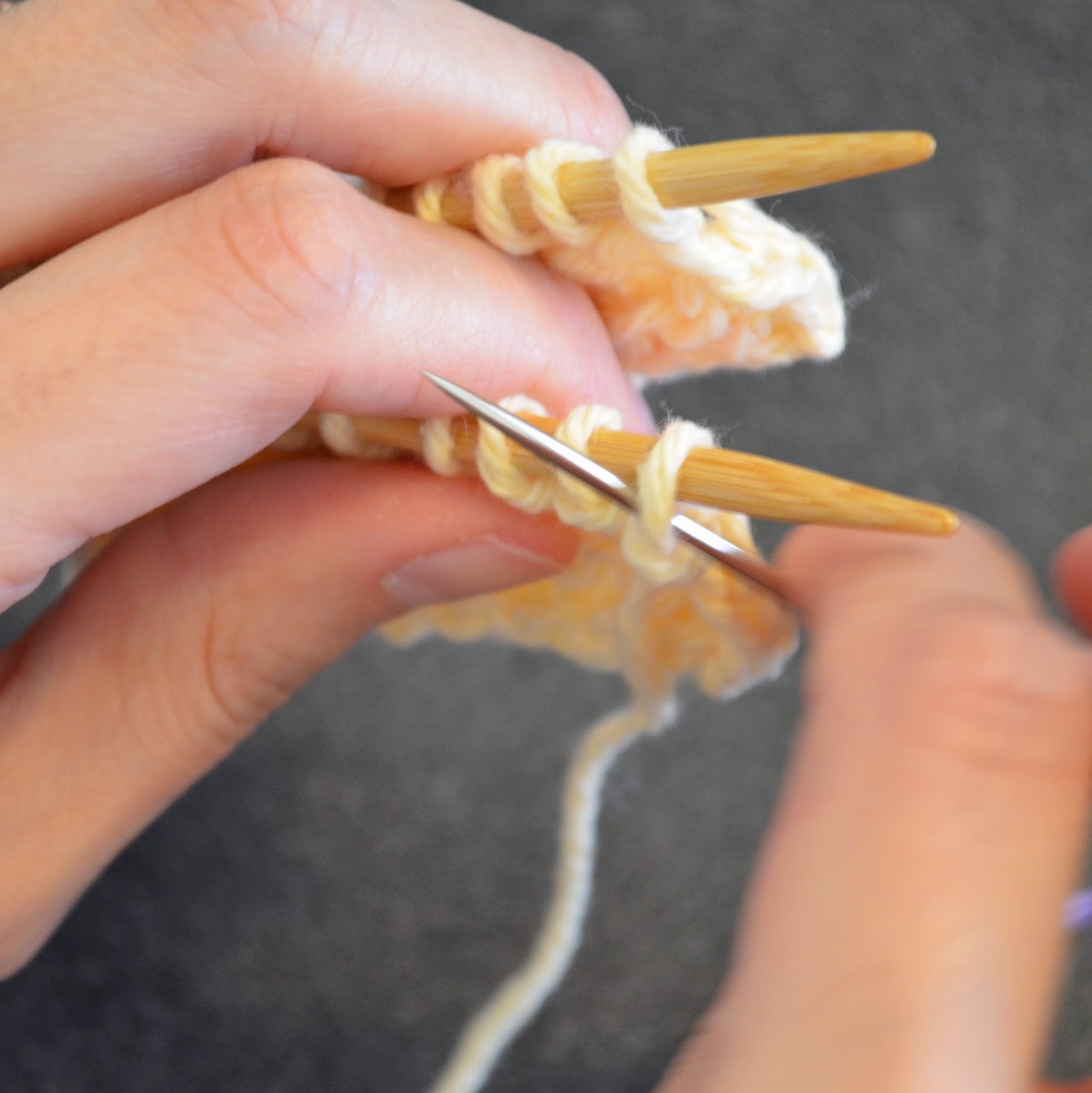
Arrange stitches on two needles so that there is the same number of stitches on each needle. Hold the needles parallel to each other with wrong sides of the knitting facing away from you (unless otherwise instructed). Allowing a yarn in the darning needle to be about four times longer than the width of the grafting area, thread matching yarn on a darning needle. Work from right to left as follows: Step 1. Bring darning needle through the first stitch on the front needle as if to purl and leave the stitch on the needle (Figure 1). Figure 1

Tutorial: Picking Up Selvedge Stitches

Image
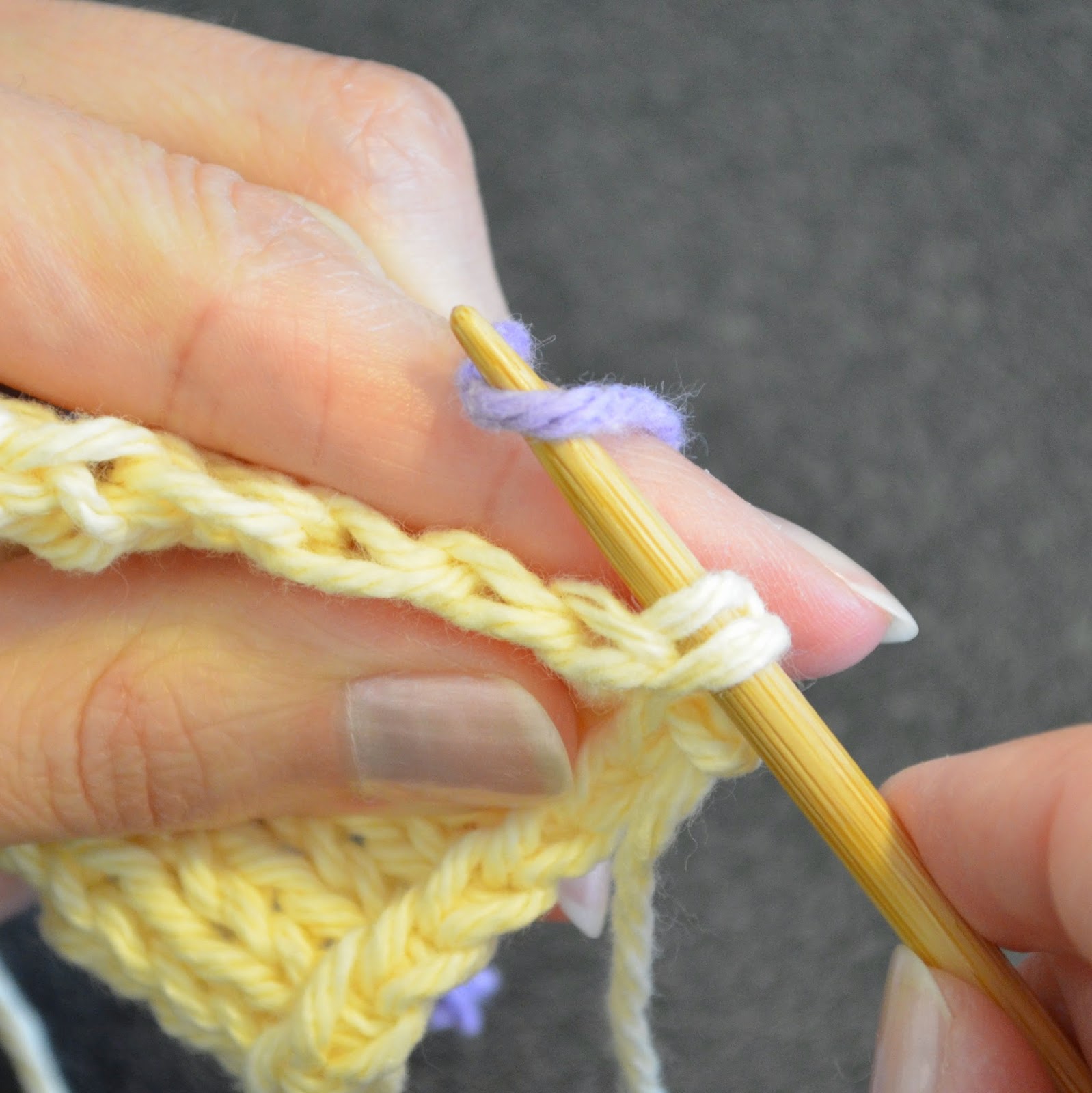
Pick up and knit stitches along the selvedges by picking up three stitches for every two selvedge stitches. To do this pick up one stitch under both loops of the first chain stitch (Figure 1), one stitch under just the back loop of the second chain stitch (Figure 2), then one stitch under both loops of the same chain stitch (Figure 3, 4). Continue in this manner along the entire selvedge edge. You will end with about a third more stitches than there are selvedge stitches. For a fuller edge, pick up one stitch from the first stitch, two from the second stitch, and two from the third stitch, and repeat this sequence along the entire selvedge edge. In order to pick up lesser amount of stitches, pick up only one stitch from one loop of the chain stitch. Figure 1

Tutorial: Crochet Chain Provisional Cast-On

Image
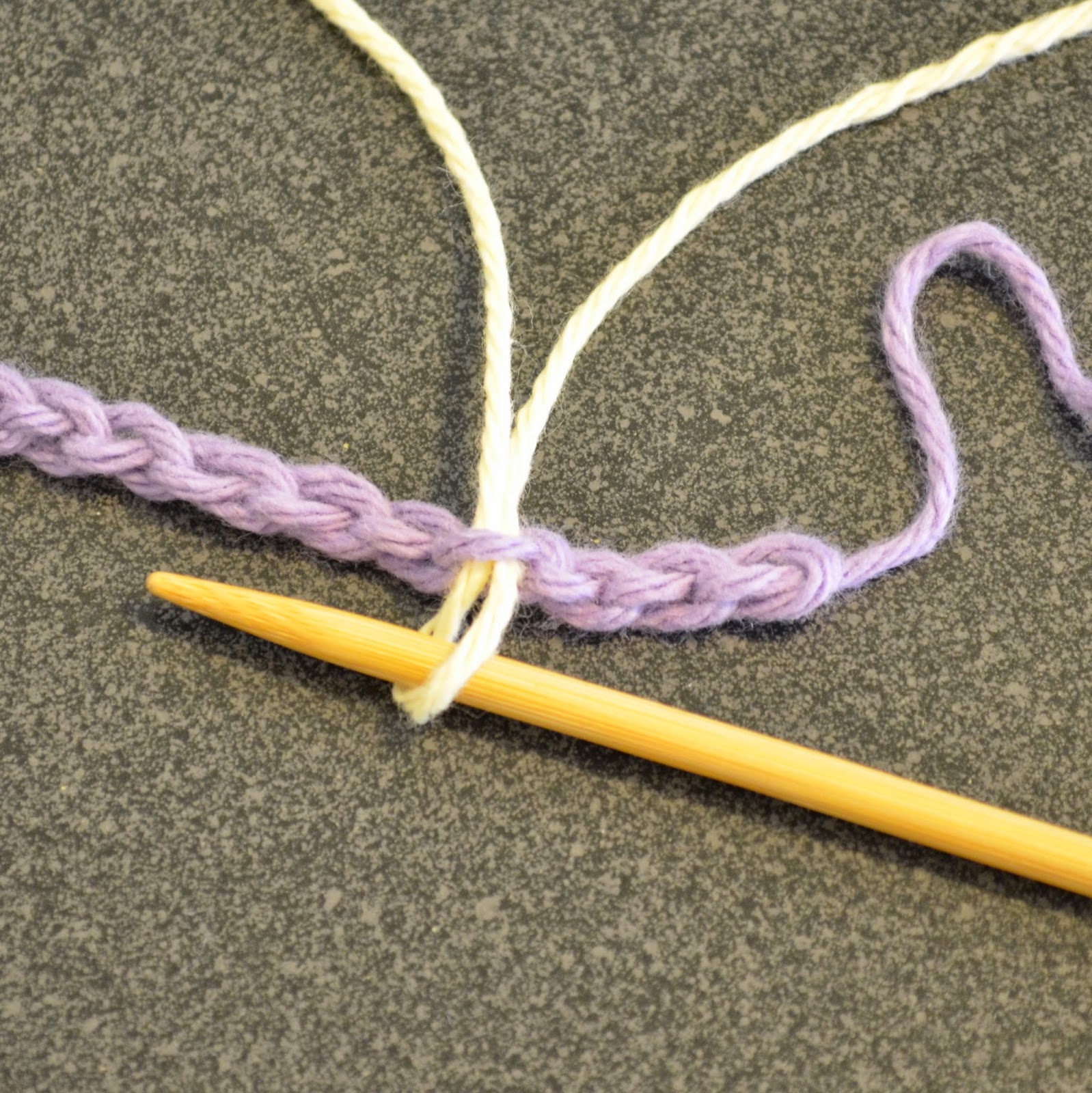
With waste yarn and crochet hook, make a loose crochet chain about six stitches more than you need to cast on. With knitting needle, working yarn, and beginning three stitches from end of chain, pick up and knit one stitch through the back loop of each crochet chain (Figure 1,2) for desired number of stitches. When you are ready to work in the opposite direction, put cast on stitches on your needle (Figure 3, 4, 5), and then pull out the crochet chain to expose live stitches (Figure 6, 7, 8). Figure 1 

Tutorial: Crochet Chain

Image
Make a slipknot and place it on crochet hook (Figure 1). *Yarn over hook (Figure 2) and draw through loop on hook (Figure 3). Repeat from * for the desired number of stitches (Figure 4, 5). To fasten off, cut yarn and draw end through last loop formed. Figure 1